


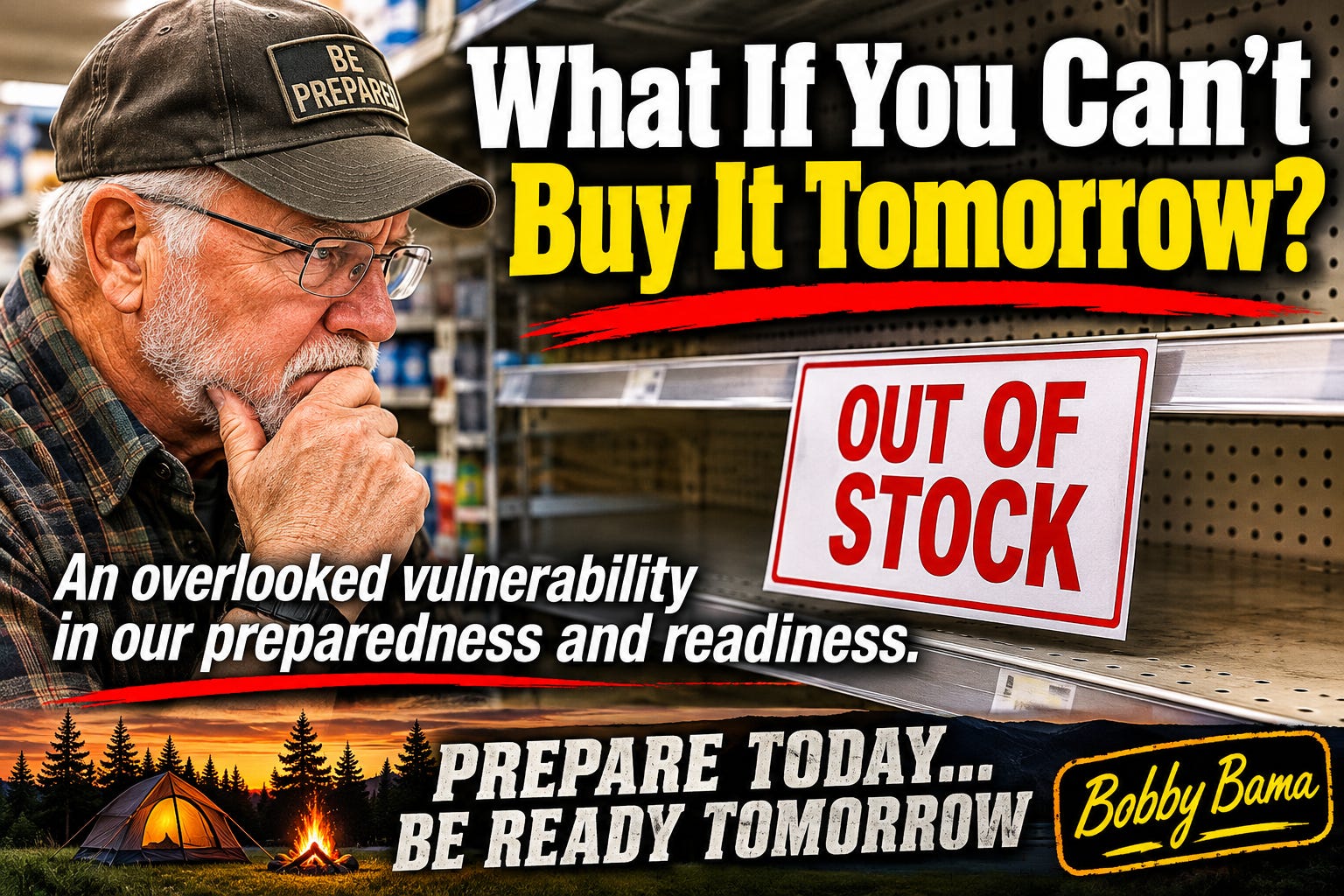
For years, Baofeng handheld radios have been inexpensive, readily available and popular among those of us interested in preparedness and emergency communications.
Now, some of those radios are becoming difficult to obtain. Regulatory changes may be contributing to the situation, although the exact cause has yet to be established.
What concerns me is that the same thing could happen to any number of items we depend upon.
Just because something has always been available doesn’t mean it will always be available.
Availability Is Not Guaranteed
We’ve become accustomed to being able to purchase practically anything we need, often having it delivered to our doorstep within a day or two.
That convenience may have caused some of us to become complacent about the availability of the equipment and supplies we depend upon.
Changes in government regulations, import restrictions, tariffs, manufacturing requirements and business decisions can all affect what is available to us and at what cost.
It doesn’t take a disaster or national emergency for that to happen.
Consider some of the things we rely upon for preparedness: portable generators, solar equipment, batteries, water purification systems, medical supplies, food preservation equipment, firearms and ammunition.
How much of that equipment, or the components necessary to manufacture it, comes from overseas? How vulnerable are those products to decisions and circumstances beyond our control?
I suspect many of us have given those questions very little consideration.
Maintaining What We Already Have
Our concerns shouldn’t be limited to purchasing new equipment. We should also consider our ability to maintain the equipment we already own.
A perfectly good water filtration system is of little value if we can no longer obtain replacement filters. The same applies to equipment that requires proprietary batteries, specialized replacement parts or other consumable supplies.
When purchasing equipment, we generally consider its quality, cost and performance. Perhaps we should give equal consideration to the continued availability of the things necessary to keep it operational.
Recognizing the Warning Signs
There are often indications that something is changing long before the consequences become apparent to the average consumer.
Proposed legislation, pending regulatory changes, trade disputes, manufacturing disruptions and announcements of product discontinuations are all potential warning signs.
So are unexplained shortages, products disappearing from multiple retailers, extended delivery times and significant price increases.
Any one of these developments deserves our attention. When several begin occurring within the same industry or product category, we ought to be paying particularly close attention.
We don’t have to become experts in government regulations or international commerce. But we should recognize that developments occurring well beyond our immediate surroundings can eventually affect our own preparedness.
The earlier we recognize a potential problem, the more options we’re likely to have.
Getting Caught Short
I suspect most of us have a mental list of equipment and supplies we intend to purchase eventually.
We know we need them. We may have already determined what we want and where to get it. We simply haven’t gotten around to it.
We all have financial obligations and competing priorities. However, unnecessarily postponing a purchase because we assume something will always be available carries a risk of its own.
And availability isn’t our only concern. Something may still be available six months from now, but at a price considerably higher than we’re willing or able to pay.
By the time a shortage becomes widely recognized, we may already be competing with thousands of others who have suddenly realized they need the same thing.
That’s not a particularly good position to find ourselves in.
Give It Some Thought
I believe it would be worthwhile for each of us to review our preparedness with these potential supply vulnerabilities in mind.
· What essential equipment or supplies have we been putting off purchasing?
· What replacement parts and consumables will we need to maintain our existing equipment?
· Are we dependent upon a single manufacturer or source of supply?
· Are there indications that something we depend upon may become more expensive or difficult to obtain?
· What would be the consequences for our household if those items were no longer available?
We may identify some vulnerabilities that deserve more immediate attention than we’ve previously given them.
If we’ve already determined that certain equipment or supplies are necessary to our preparedness, and we have the financial means to obtain them, what are we waiting for?
A Final Thought
The Baofeng radio situation may ultimately prove to be a temporary disruption. Nevertheless, it serves as a reminder of how vulnerable our access to certain equipment and supplies can be.
We spend a considerable amount of time preparing for circumstances that could disrupt our daily lives. We should also be paying attention to circumstances that could disrupt our ability to prepare.
We shouldn’t assume that we’ll always have the same opportunities tomorrow that we have today.
I’d much rather get what I know I need while I can still get it than find myself caught short, wishing I had taken care of it when I had the opportunity.
Bobby Bama