


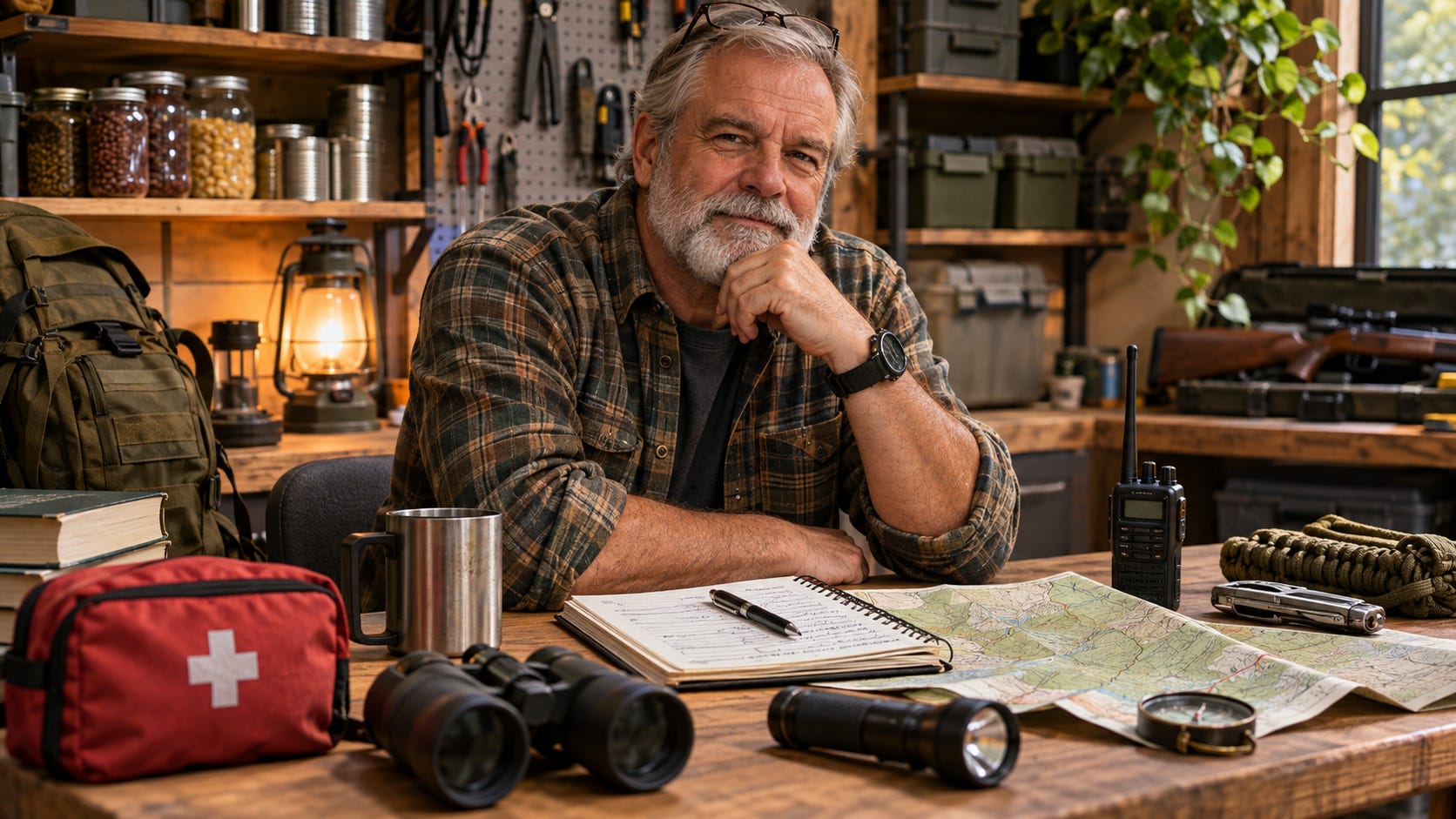
Spend enough time watching preparedness videos on YouTube, and you might come away believing that if you aren’t wearing a plate carrier, carrying a rifle that costs more than your first car, and training like you’re trying out for Delta Force, you’re probably not going to survive whatever comes next.
Now, don’t get me wrong. I enjoy the tactical side of preparedness. I believe in it. I believe a person ought to have the knowledge, skills, and training necessary to protect themselves, their family, and their property.
As a matter of fact, I’m 66 years old, and I’m getting ready to head to Ohio for a three-day field training exercise. And yes, there’s going to be plenty of tactical training involved.
But let’s face it. I’m not 26 anymore.
There are things some of those younger folks can do all day that I can probably do for a little while before deciding it’s time to sit down, get something cold to drink, and reconsider some of my life choices.
That’s just reality.
And there’s nothing wrong with recognizing reality.
But it brings me to something I’ve been thinking about lately.
What happens when you take preparedness seriously, want to continue developing your tactical capabilities, but recognize that there’s a whole lot more to you than being Tactical Tommy?
And where exactly do you fit into this preparedness community?
A Question I Had to Ask Myself
Not long ago, I found myself having a pretty interesting conversation about my own place in the preparedness and readiness community.
I’ve been involved in preparedness for some time. I’ve learned things, tried things, made mistakes, spent money on things I probably didn’t need, and continued trying to improve my capabilities.
Sound familiar?
But something had been bothering me.
I knew I wanted to continue learning. I knew I wanted to be involved. I knew I had certain interests and abilities.
What I hadn’t really figured out was where those things fit together.
In other words, what exactly does Bobby Bama bring to the table?
And once I figured that out, there was another question.
Does anybody else want what’s on that table?
Now, that’s not something I’d spent my days sitting around worrying about. But it was a legitimate question, and one I decided was worth examining.
So I started taking inventory.
Not of my ammunition, medical supplies, or food storage.
Of myself.
My experience. My interests. My abilities. My limitations. The things I enjoy doing. The things I’m reasonably good at. And, perhaps just as importantly, the things I’d like to get better at.
And that’s where things started getting interesting.
Well, Imagine That. There Might Be More to Me Than Tactical Training.
I’ve spent roughly 40 years working as an investigator.
Over those years, I’ve spent a considerable amount of time gathering information, evaluating what people say, looking for things that don’t quite add up, recognizing patterns, assessing situations, and trying to make decisions based on the best information available.
It’s what I do.
I’ve also always enjoyed figuring out how things work, identifying problems, developing plans, organizing information, and turning an idea into something that actually works.
Now, none of that makes me a Special Forces operator.
But when I started looking at those experiences through the lens of preparedness and readiness, something occurred to me.
Maybe some of the things I’ve spent a lifetime learning have a place in this community, too.
Intelligence gathering. Situational awareness. Threat assessment. Area studies. Planning. Identifying vulnerabilities. Working through problems before they become emergencies.
Those are all things that interest me, and they’re all things I can continue learning about and developing.
The interesting part wasn’t discovering some wonderful new talent I never knew I possessed.
It was recognizing that things I’d been doing for years might have applications in preparedness that I hadn’t really considered.
I hadn’t discovered a new Bobby Bama.
I’d simply discovered another way the old Bobby Bama might be useful.
And I’ll tell you something. I rather enjoyed that discovery.
But it also got me wondering.
How many other people in the preparedness community might be overlooking something about themselves?
Somebody Has to Bring the Beans, Bullets, and Band-Aids
Let’s think about this for a minute.
Suppose you’ve got a group of people who are exceptionally well-trained in tactical operations.
They know their equipment. They communicate effectively. They can move, react, and perform their assigned tasks.
Outstanding.
Now, who’s keeping track of their supplies?
Who’s maintaining their equipment? Who’s managing their communications? Who’s evaluating incoming information? Who’s looking after medical requirements? Who’s figuring out transportation, fuel, food, water, and all the other necessities?
Because I don’t care how tactically proficient you are, sooner or later somebody’s going to need something to eat.
And somebody had better know where the beans are.
The fact is, preparedness involves an enormous range of responsibilities, knowledge, and skills.
And not everybody is going to be equally interested in or capable of performing every one of them.
Take a retired accountant, for example.
He might be perfectly serious about personal protection, maintain whatever defensive proficiency he’s capable of achieving, and have absolutely no desire to spend his weekends running through the woods wearing 40 pounds of equipment.
But he might be exceptionally good at budgeting, planning, managing resources, and helping people understand the financial side of becoming better prepared.
Or consider a woman who’s spent years organizing people, managing complicated projects, and making sure everything gets done.
She might develop the defensive skills she considers necessary while discovering that her organizational abilities could be tremendously valuable in a preparedness group.
Then there’s the young father who’s trying to figure out how to keep his family safe.
He may be learning basic defensive skills while also discovering the importance of household planning, communications, emergency procedures, and making decisions when things aren’t going according to plan.
And then there’s somebody like me.
An older fellow who enjoys tactical training, intends to continue doing it, but also realizes that his investigative experience and interest in intelligence and planning might be another way to make a worthwhile contribution.
Different people. Different interests. Different capabilities.
All taking preparedness seriously.
And all potentially bringing something useful to the table.
YouTube Isn’t the Whole Preparedness Community
Now, I enjoy YouTube. There’s an incredible amount of useful information available there, including some excellent tactical instruction and demonstrations.
But depending on what you watch, you can develop a pretty narrow impression of what being prepared is supposed to look like.
There are plenty of firearms, tactical equipment, survival gadgets, and people demonstrating skills most of us will never completely master.
Some of those people are exceptionally knowledgeable, and there’s a lot we can learn from them.
But I sometimes wonder whether somebody who’s relatively new to preparedness watches all that and thinks, Well, if that’s what it takes, I’m in trouble.
Maybe they’re older. Maybe they have physical limitations. Maybe they’ve got a demanding job, a family, and only so many hours in the week.
Or maybe they’re simply interested in different aspects of preparedness.
That doesn’t mean they shouldn’t learn how to protect themselves or develop the skills necessary to deal with emergencies.
It means there’s more to preparedness than what happens to get the most attention on a YouTube channel.
And there’s certainly more than one way to become a capable, useful member of a preparedness community.
So, Where Does That Leave Us?
I can’t answer that question for anybody else.
Heck, I’m still working through parts of it myself.
But I can tell you what came out of my own little examination.
I started recognizing opportunities to take things I already knew, combine them with subjects that genuinely interest me, and develop capabilities that might be useful to myself, my family, and perhaps other people in the preparedness community.
That doesn’t mean I’m finished learning tactical skills.
Far from it.
I’ve got three days in Ohio coming up that will probably remind me of a few muscles I’d forgotten I had.
And I intend to keep improving wherever I can.
But I also intend to spend more time studying intelligence, area studies, threat assessment, situational awareness, planning, and the practical application of those disciplines to everyday readiness.
Not because I’ve suddenly become an expert in all those subjects.
Because they interest me, they fit with much of my experience, and I believe there’s something useful I can develop there.
That’s what my little personal examination revealed.
And I suspect there may be some other folks out there who could have a similar experience if they ever decided to take a good look at what they already know and what they’d like to learn.
Maybe you’re a mechanic. A nurse. A teacher. A farmer. An electrician. A truck driver. A retired police officer. A homemaker who’s spent years keeping a household running when everything seemed determined to fall apart.
Or maybe you haven’t figured out what particularly interests you yet.
There’s an awful lot that goes into being prepared.
And an awful lot of room for people with different experiences and abilities.
Maybe It’s Worth Asking Yourself
So here’s the question I’ve been working my way around.
Who am I in relation to preparedness?
Not who do I look like on YouTube.
Not how many guns do I own.
Not whether I can keep up with somebody half my age during a three-day field exercise.
But what do I know? What am I capable of doing? What interests me? What would I like to learn? And where might those things be useful?
And then, of course, there’s that second question.
Does anybody else have a use for what I can offer?
I don’t have all the answers to either one.
But I’m beginning to recognize some possibilities I hadn’t really considered before.
And that’s been a pretty worthwhile experience.
So, if you’ve ever wondered where you fit into the preparedness community, maybe there’s something here worth thinking about.
You don’t have to be Tactical Tommy.
You can certainly learn from him. You might even want to train alongside him.
I know I do.
But while Tactical Tommy is out there doing his thing, somebody still has to make sure the beans, bullets, and Band-Aids are accounted for.
And somebody has to figure out what’s going on, what might happen next, and what we’re going to do about it.
Maybe that’s your thing. Maybe it’s something else entirely.
As for me, I haven’t figured everything out.
But I have discovered that there’s more to my place in preparedness than I’d been giving much thought to.
And at 66 years old, I figure that’s not a bad discovery to make.
— Bobby Bama
Awesome work here. I had already taken a look at myself and one reason I jumped back into rucking and Patroling again. It is easy to come in a flop and say ill do it it tomorrow. The problem is tomorrow never gets here. What most people refuse to see and believe is there is always room for self improvement
Well done! Look forward to having you back up in the Ohio Lands!